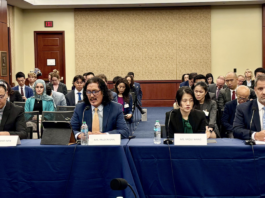

Kathmandu | August 6, 2026: Nepal has cancelled a major international conference on Tibetan studies that had been in preparation for four years, reportedly after sustained diplomatic pressure from China. According to multiple senior government officials cited by the Kathmandu Post, the decision overruled assessments from Nepal’s own security agencies and reversed earlier assurances from the Home Ministry that the event would proceed with appropriate security measures.
The week-long conference, organized in collaboration with the International Association for Tibetan Studies (IATS) and Kathmandu University, was scheduled to bring together scholars from around the world to discuss Tibetan history, language, culture, philosophy, religion, and art. The event had originally been awarded to Nepal in 2022, and organizers said extensive preparations had been underway ever since.
Government Reversed Earlier Position
Officials familiar with the decision said Chief Secretary Govinda Bahadur Karkee, following consultations with Foreign Secretary Amrit Bahadur Rai, personally instructed Kathmandu University to halt the conference. The reported decision was made without cabinet approval despite its foreign policy implications.
Earlier, Home Minister Sudan Gurung had publicly stated that the seminar would not be cancelled and that authorities would instead conduct security screening of participants.
According to senior security officials quoted in the report, Nepal’s security agencies had assessed the event and found no immediate justification for cancellation, recommending continued monitoring rather than shutting it down.
Chinese Diplomatic Lobbying
The reported reversal followed weeks of diplomatic engagement by Chinese officials.
On July 21, Chinese Ambassador Zhang Maoming met Foreign Secretary Rai and reportedly urged Nepal to remain “vigilant” regarding participants who could make pro-Tibet statements.
Later, Venerable Master Yinshun, a senior member of China’s Chinese People’s Political Consultative Conference (CPPCC) and former vice president of the Buddhist Association of China, visited Nepal. According to security officials, discussions during his visit also touched upon the conference.
Following these meetings, several scholars affiliated with the Tibetan Policy Institute in India reportedly withdrew from participating.
Organizers Say Conference Was Purely Academic
Conference organizers rejected suggestions that the seminar carried any political agenda.
They noted that around 100 Chinese scholars, including researchers from Peking University and the China Tibetology Research Centre, had registered to attend.
Organizers also stated they had assured Nepalese authorities that:
- No pro-Tibet or anti-China political activities would be permitted.
- No activist speakers would be invited.
- The conference would remain strictly academic.
Kathmandu University similarly maintained that the event focused exclusively on scholarly research and had no political objective.
Link to China’s Ethnic Unity Law
One organizer suggested that Beijing’s concerns may have intensified following international criticism and protests surrounding China’s Ethnic Unity Law, which came into effect on July 1, 2026.
The law has drawn criticism from human rights organizations for promoting assimilation policies under the banner of “ethnic unity” and for reinforcing the Chinese Communist Party’s ideological framework.
According to officials quoted in the report, the conference became politically sensitive amid growing international attention on Tibet and concerns that Nepal could become a platform for criticism of Beijing’s policies.
Academic Freedom and Foreign Influence
The cancellation has raised broader questions about academic freedom, institutional autonomy, and the extent of foreign influence over domestic decisions in Nepal.
Kathmandu University has since withdrawn as convener of the event, leaving the International Association for Tibetan Studies to determine whether the conference can be relocated and held elsewhere.
Meanwhile, a Chinese delegation connected to the conference is still expected to visit Nepal later this month, led by Jiang Jianguo, a senior member of the CPPCC and executive vice president of the China Society for Human Rights Studies.
The Chinese Embassy in Kathmandu did not respond to requests for comment, according to the report.
The episode has sparked renewed debate over Nepal’s balancing act between safeguarding its academic institutions and managing its diplomatic relationship with China.